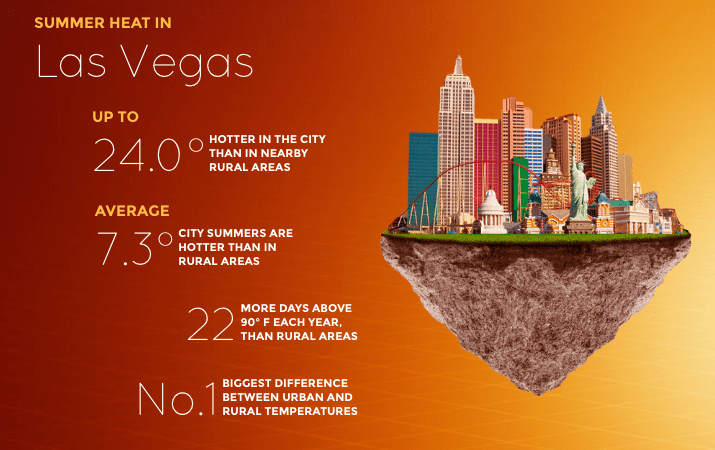
Thanks to its positioning in the desert, Las Vegas can top temperatures of 40*C during the summer months. Heat islands are created above Las Vegas. These happen when building materials that hold heat, transfer the stored heat energy to the surrounding air (via radiation and conduction) (Black, et al. (2013). This creates higher night-time temperatures in the city. In past years Las Vegas has been on average 7.3*C hotter at night than surrounding urban areas (Hanscom, 2014) – this makes it the city in the USA where the heat island effect is most pronounced (Wilson, 2019). Climate change is increasing the number of heat wave events, whilst urbanisation is increasing the prevalence of the heat island effect.
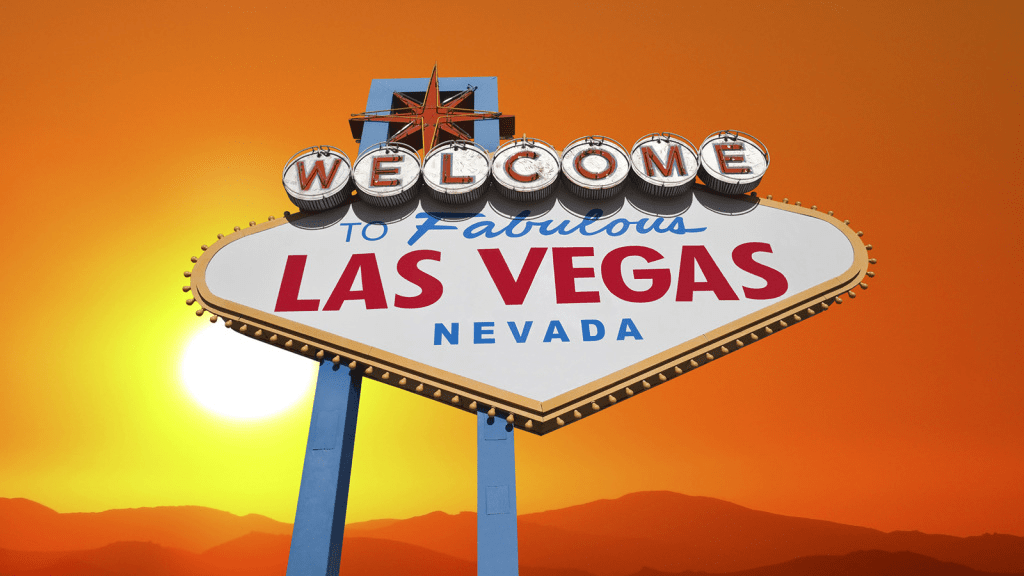
Heat related deaths are the biggest climate related killed in the USA (Wilson, 2019). Patterns of mortality from heat wave within cities often match closely with patterns of low socio-economic status (Graham, 2015). In Vegas this is also seen to be true. Between 2006 to 2017 there were 437 heat related deaths (Bandala, 2019). A relatively high proportion of these were in the homeless communities living in Las Vegas. Whilst the homeless are often able to seek shade during the day in tunnels underneath the city, the sweltering night-time temperatures push their bodies to the limit. Temperatures can reach in excess of 35*C overnight due to the urban heat island effect. Nearly a quarter of heat related deaths occurred in the 20-50 year old population. The majority of these had pre-existing drug and alcohol abuse problems (Flavelle and Popovich, 2019). These often resided in the poorer suburbs of the city – often these dwellings did not have air-conditioning (AC), or when they did often the cost of using the extra electricity to power the AC units was too high (Graham, 2015).
Heat related deaths remain under-reported. It is claimed that heat is only used as the explanation of death when all other explanations can be ruled out (Flavelle and Popovich, 2019). Often times heat is ignored as a contributor to death if it is seen as an aggravator of a pre-existing condition such as asthma. This means that the statistics for heat induced deaths is likely to stand far higher.
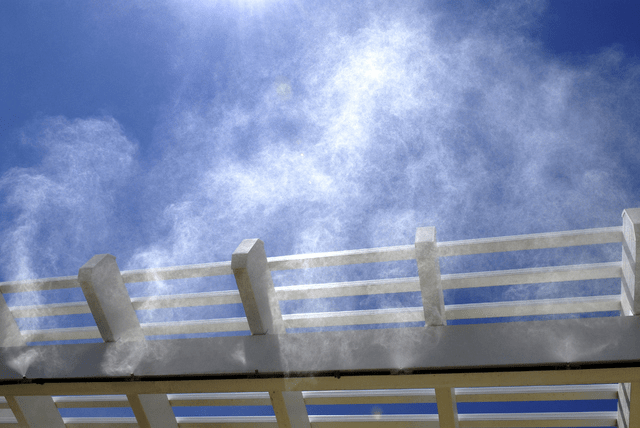
The production of urban air in indoor environments along the Las Vegas strip ensures that tourists are protected from the scorching heat. Indoor air production implies a mixing of both the social and the natural to create a form of urban nature (Gissen, 2008). Cooling and filtering occur to ensure that the air within indoor spaces is comfortable for tourists visiting the city. Along busy street passages on the Las Vegas strip, large industrial fans and water mist machines are strategically placed to help tourists cope with the punishing heat
Officials are now left with decisions to make in order to tackle the rising number of heat related deaths within Las Vegas. Whilst climate change is a global influence increasing the instances of heatwaves, the regional urban heat island effect is one which can be addressed. City planners need to begin to move away from heat absorbing materials – such as concrete – and retrofit buildings with materials that absorb less heat, they also need to create more urban vegetative spaces (using drought resistant plants to conserve water).
Heat dumping from AC units – due to heat exchange at the transformers is another significant source of excess heat in the city. However it is unlikely that state officials or hotel/casino owners will reduce the usage of indoor air cooling due to the importance of the tourist economy within the city. This shows how different groups within a city are treated with varying importance. Despite those in the Las Vegas suburbs being long term residents – they provide less value to the economy than the hordes of tourists visiting the city’s indoor environments. This means that policy changes for use of AC units and changes to buildings are unlikely to be introduced due to the disruption that it would cause tourists.
Overall, this blog post shows how climate change can have a significant impact on regional climate in Las Vegas. This impact is made more significant due to the urban land use in Las Vegas and the creation of heat islands that make living conditions unbearable for the vulnerable in society. City planners in Las Vegas need to address the creation of urban heat islands by encouraging more environmentally sustainable building – incorporating more vegetative space in to urban planning and using building materials that absorb significantly less heat.
Word Count: 748
References:
Bandala, E, et al. (2019) Extreme heat and mortality rates in Las Vegas, Nevada: inter-annual variation and thresholds, International Journal of Environmental Science and Technology
Black, A. et al. (2013) Temperature Trends and Urban Heat Island Intensity Mapping of the Las Vegas Valley Area ProQuest Dissertations and Theses. Web
Flavelle and Popovich (2019) Heat deaths jump in South West, United States, Puzzling Officials, NY Times, NY https://www.nytimes.com/2019/08/26/climate/heat-deaths-southwest.html, 14/02/2020
Graham, S. (2015). “Life support: The political ecology of urban air.” City 19(2-3): 192-215.
Gissen, D. (2008). Atmospheres of late-modernity the urban production of indoor air in new york city, 1963–2003 (Order No. U591482). Available from ProQuest Dissertations & Theses Global
Hanscom, G. (2014 ) Vegas tops the list of country’s worst heat islands, (WWW) GRIST, Seattle (https://grist.org/cities/vegas-tops-the-list-of-the-countrys-worst-heat-islands/, 13/02/2020)
Wilson, M. (2019) Las Vegas planners discuss how to mitigate the ubran heat island effect, (WWW) Las Vegas Sun: Nevada (https://lasvegassun.com/news/2019/oct/16/las-vegas-planners-discuss-how-to-mitigate-the-urb/, 13/02/2020)
 Urban Political Ecology