Water, for a long time, has been the centre of environmental concern in Cape Town. The city, however, is battling a major “waste crisis” which has been brought to light by the water crisis. Throughout the drought, residents collected water using bottles which drove increases in plastic usage and waste across the city. Cape Town is drowning in waste with experts stating that landfills are filling up at an extreme rate (Githahu, 2019). In 2018, South Africa sent 90% of their 59 million tonnes of general waste to landfill; only 10% of waste was recycled (Department of Environmental Affairs, 2018).
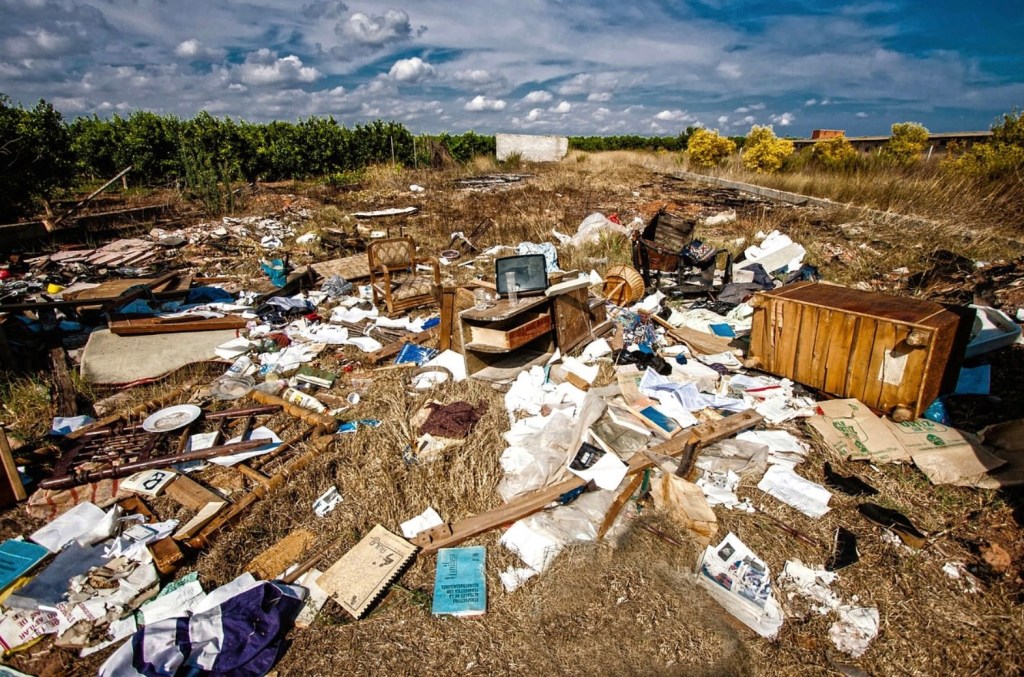
When waste is organised, and out of sight, business continues as usual and urban order is maintained. When garbage, however, is not appropriately managed and starts to stem out of control, it becomes the “ultimate symbol of non-progress” (Fredericks, 2018). Figure 1 illustrates this chaotic mess which presents illegal dumping found at a site in the city. As Cape Town continues to experience rapid population growth and urbanisation, the quantity of waste grows, and the city sends large amounts of waste to landfill. Cape Town is placing immense pressure on the city’s landfill capacity. The city is working to develop solutions to the waste problem by moving towards the concept of a circular economy. In 2016, Cape Town established the Fifty/50 Wheelie Bin program, which has a been hugely successful strategy to divert waste from landfill (C40, 2017). The project has created 22 jobs, a reduction of 63% in global warming potential and city savings of $160,000.
At present, the city does not have a formal recycling programme, and it does not provide incentives for individuals to recycle. Recycling is carried out by the private or informal sector. There are, however, numerous strategies to create a circular economy. Ecopreneurs in Cape Town think differently about waste, not as a challenge or a threat to social order but as an opportunity to innovate, create and improve. Many informal non-profit companies operating within Cape Town have established economically viable green solutions in the city. One such example is the Oranjezicht City Farm (OZCF), a community-based farmers style market. The market is helping to create circular food systems by reducing food, packaging and plastic use (GreenCape, 2020). The OZCF introduced the ‘Bokashi Brigade’ which receives food waste from households and businesses. The market is celebrating local produce and culture while simultaneously bringing the community together. This example highlights the strength of the city’s citizens to make change. Through bottom-up approaches to environmental challenges, people engage with nature and promote sustainable action together.
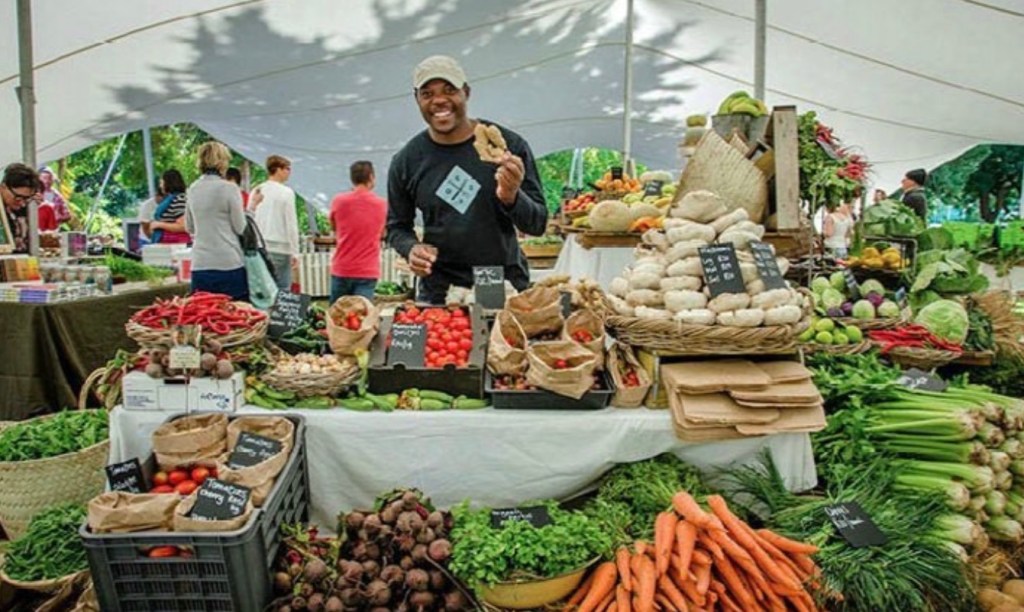
Figure 2: Oranjezicht City Farmers Market, Cape Town. (Cape Town in Colour, 2015)
Figure 3 depicts a man, Ryan Morris hauling a trolley filled with rubbish down a street in Cape Town. An unusual sight for some, this is an everyday occurrence in Cape Town. Collecting and selling waste is a way of getting by and making a living in Cape Town and many other cities. Waste pickers form part of the urban informal workforce in South Africa, and they are a crucial part of the recycling industry in the city (Langenhoven and Dyssel 2007; Samson 2010). Workers such as Ryan Morris divert waste from going into landfills for little to no cost. Waste pickers collect an estimated 90% of recyclables, saving municipalities R750 million per year in landfill space (Matshili, 2019).
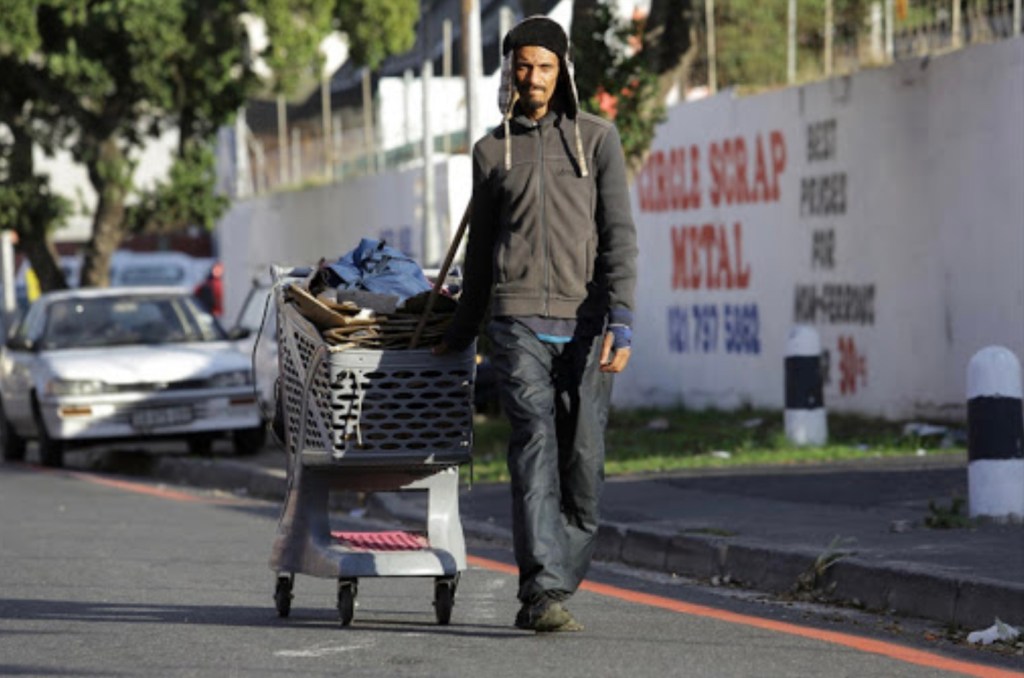
Figure 3: Waste picker, Ryan Morris pulling trolley filled with rubbish. (Farber, 2016)
The video in figure 4 outlines how the Department of Environmental Affairs hosted an integration workshop for waste pickers in Pretoria. The Department is working on guidelines to give waste pickers official status and make them a part of the formal waste sector.
Figure 4: Environmental Affairs Department discusses the role of waste pickers (ENCA, 2019)
Waste is more than a tangible object. Understanding waste beyond its physical properties reveals a plethora of social, political and environmental issues. It raises awareness of wide societal processes which are less about waste and more about people, labour, social relations, inequality and more. Waste moves around the city, mixing with people and other metabolisms to produce life and movement. These social processes bring waste to life (Amin, 2014). Through a UPE lens, I have revealed how waste in Cape Town is not just about a city in crisis. Waste is a way of making a living, a platform for creation and innovation and most importantly, it brings people together.
Words: 758
References:
Amin A (2014) Lively infrastructure. Theory, Culture & Society, December 2014, Vol.31(7-8), pp.137-161
C40 cities. 2017. C40: Cities100: Cape Town – Turning Trashed Bins Into Trash Bins. [online] Available at: <https://www.c40.org/case_studies/cities100-cape-town-turning-trashed-bins-into-trash-bins> [Accessed 10 March 2020].
Department of Environmental Affairs, 2018. South Africa State Of Waste Report. [online] Pretoria: Department of Environmental Affairs. Available at: <http://sawic.environment.gov.za/documents/8635.pdf> [Accessed 6 March 2020].
ENCA, 2019. Waste Pickers Key To Recycling Industry: Experts. Available at: <https://www.enca.com/news/waste-pickers-key-recycling-industry-experts> [Accessed 3 February 2020].
Fredericks, R. (2018). Garbage citizenship. Durham, N.C: Duke University Press.
Githahu, M., 2019. ‘Waste crisis’ in spotlight as SA is running out of landfill space. IOL, [online] Available at: <https://www.iol.co.za/capeargus/news/waste-crisis-in-spotlight-as-sa-is-running-out-of-landfill-space-36780078> [Accessed 8 March 2020].
GreenCape, 2020. Building Resilient Urban Communities Through Circular Food Systems: Oranjezicht City Farm And Market. [online] Cape Town: GreenCape. Available at: <https://www.green-cape.co.za/assets/GreenCape_Resilience-Report_Urban_Farming_WEB-1.pdf> [Accessed 8 March 2020].
Matshili, R., 2019. Waste Pickers Collect Up To 90% Of Recyclables Saving Municipalities Millions. [online] IoL. Available at: <https://www.iol.co.za/pretoria-news/waste-pickers-collect-up-to-90-of-recyclables-saving-municipalities-millions-20873584> [Accessed 10 March 2020].
Langenhoven, B., & Dyssel, M. (2007). The recycling industry and subsistence waste collectors: a case study of Mitchells Plain. Urban Forum, 18(1), 114-132.
Samson, M. (2010). Reclaiming reusable and recyclable materials in Africa: a critical review of English language literature. http://www.inclusivecities.org/research/RR6_Samson.pdf. Accessed on 10 March 2020.
Figures:
Figure 1: SkipIt Green. 2020. Cape Town: Illegal Dumping Is Widespread In Our Community – Skipit Green. [online] Available at: <https://www.skipitgreen.co.za/illegal-dumping-cape-town-south-africa/> [Accessed 10 March 2020]
Figure 2: Farber, T., 2016. Meet the bin scavengers saving SA R750-million a year. Sunday Times, [online] Available at: <https://www.timeslive.co.za/sunday-times/news/2016-05-08-meet-the-bin-scavengers-saving-sa-r750-million-a-year/> [Accessed 13 March 2020].
Figure 3: Cape Town in Colour, 2015. CAPE TOWN FARMERS MARKET RELOCATES TO THE V&A WATERFRONT. Available at: <https://capetownincolour.wordpress.com/tag/oranjezicht-city-farm/> [Accessed 13 March 2020].
 Urban Political Ecology
Interesting thoughts on how waste has become a hot topic, especially in the ways it can bind together previously isolated communities and help to alleviate poverty for the most desperate individuals. Appeared to have a very different experience while researching Toronto’s dealing with waste. It appeared to more divisive between those in positions of power, white Torontonians, and native populations who were being negatively impacted by landfill sites. The actions taken by the authorities only seemed to reinforce such divisions.
LikeLiked by 2 people
Interesting post with a topical video at the end. I really like how you have seen the waste problem being addressed by the locals due to flaws in the governance. Interesting as the solutions to the western world (and seen in Las Vegas) waste problems tend to be top down. It’s also thought-provoking to see how waste and progress are interlinked – and how the South African image of being progressive is challenged by the sheer amount of waste that they have due to their development.
LikeLiked by 1 person
Thank you for the comment. Through an examination of the different approaches to waste throughout our blogs, like you said, it appears the there are many differences between cities in both the global north and south. However, like Cape Town many other cities around the world our beginning to progress towards a circular economy. Waste is frequently treated as a sign of disorder and chaos, cities could learn from Cape Town’s positive approach, waste can also provide opportunity.
LikeLike