During a health crisis, the effects of the high paced nature of life in urban spaces including accelerated urbanization, faster and more effective transportation, architectural development, and international tourism become obvious (Keil et al, 2020). In a separate article, Keil et al (2018) discuss the intricacies of the racialization of diseases in Toronto during the SARS outbreak. Interestingly, taking a look at the coronavirus crisis in Amsterdam reveals differing issues of discrimination. Being a capital city as well, the flows of people coming in and out made Amsterdam a hotspot for the virus in the nation. Additionally, the way the government has narrated and implemented policies during the global pandemic reflects a separation of the elderly from the masses, in the name of rationality. This entry will look at the government regulations during the COVID-19 outbreak, and the implications of them.
Amidst this global pandemic, the Netherlands stands out with its relatively lax measures. In March, they openly embraced the controversial idea of herd immunity and have since changed the discourse to ‘intelligent lockdown’, saying that mass lockdown was not feasible. The emphasis is on doing everything in “controlled distribution”; keeping calm, cool, and collected (Holligan, 2020). For a population of 17.2 million, infection rates are, however, relatively high. The government denies any panic, claiming this is due to high levels of reporting.
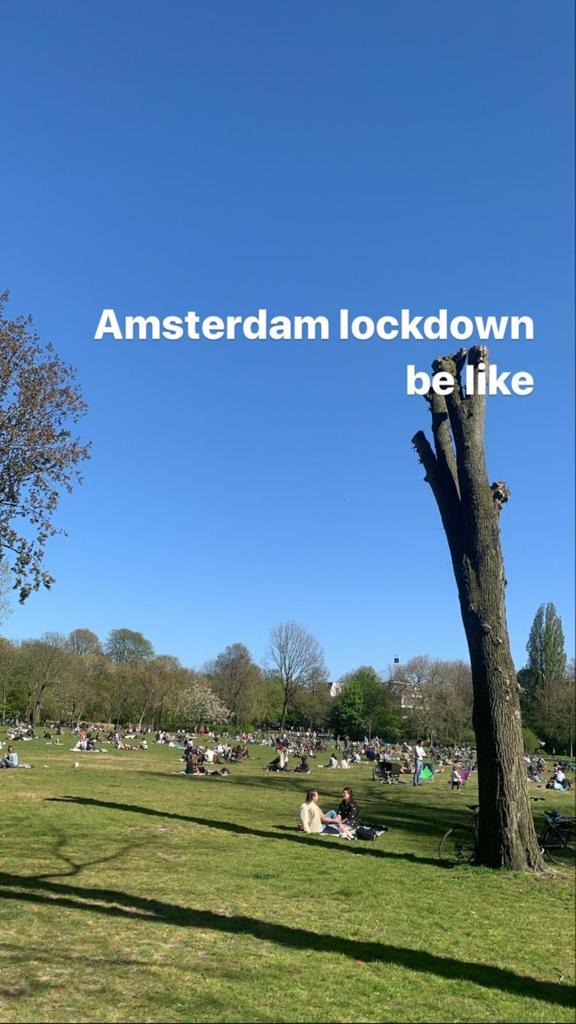
Not all businesses are required to shut, only those that involve touching (hairdressers, red light district brothels, beauticians, etc.) You can leave the house for essentials and exercise, as long as you are 1.5 meters away from others (punishable by fines, although city dwellers have indicated a lack of noticing enforcement). Construction work has not been halted in the city, including a replacement of two natural gas plants and an auxiliary heat plant in Diemen by a biomass plant.
Up until the end of March, meetings below 100 were still allowed in comparison to neighboring countries, specifically Belgium, that had already established strict full lockdown. Recreational boats in the cities’ canals were banned in the beginning of April, after warm weather brought many out to pleasure-cruise.

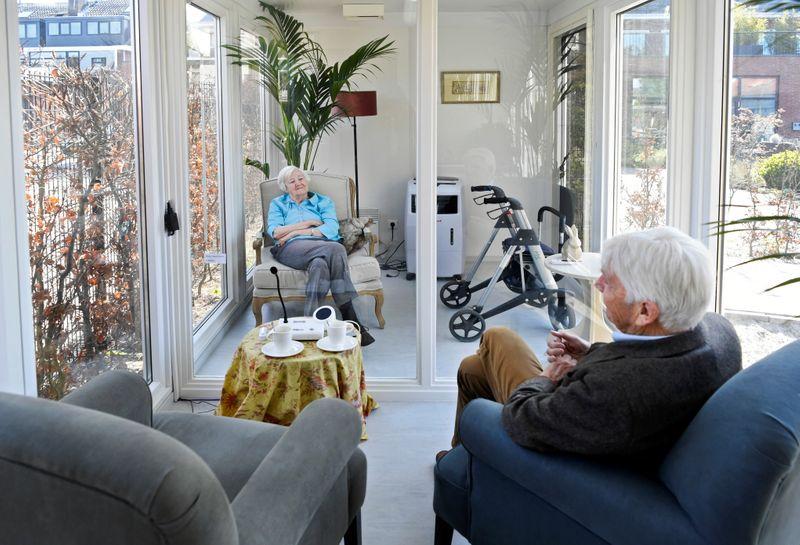
Prime Minister Mark Rutte claims it is easier to separate generations in the Netherlands, especially in urban spaces, due to the fact that sending the elderly to live in care homes is a large part of Dutch culture (Smits et al, 2014). To exemplify the level of sophistication in the care system, look towards ‘Dementia Village’, just outside of Amsterdam, a ‘cutting edge elder care facility’. Although the Netherlands is advanced in its protection and maintenance of the well-being of the elderly usually, during this pandemic there seems to be an ominous lack of care. This separation looks like a blessing for the young and a death notice for the old.
There is much controversy over the lack of transparency of the situation in elderly homes. In the beginning of April, the public health body (RIVM) announced that out of the 2,500 nursing homes, the virus had reached 40%. More than 1,270 elderly have died.

Amidst ‘advanced care planning’, doctors have been calling the elderly and asking them what they would want, given they fall ill. Doctors have been advising to ‘think twice’ before agreeing to treatment in intensive care units (van den Berg et al, 2020). The Prime Minister denies criticisms that this is an attempt to ration scarce ICUs, claiming the calls are protocol.
However, not all is so negative. The municipality, amidst this crisis, has decided to change their economic model to a more sustainable ‘doughnut economy’. This is further discussed in this blog post.
To return to the somber tone: another worrying factor to consider is ethnic disparities among the elderly. The elderly of Turkish and Moroccan descent use the Dutch extensive health care services less than the native Dutch do, due to various cultural differences and language barriers (Denktas et al, 2009). How might this play out during the pandemic? In the context of Amsterdam where half of the residents are from backgrounds other than ethnically Dutch, how do cultural norms within family care-taking affect who is getting ill, and who is economically advantaged? It seems that the government has failed to even acknowledge these highly problematic issues, let alone find a more equitable solution.
It is easy to see that the government’s generalizations about Dutch culture exclude certain groups. Especially when vulnerability to the virus is dependent on privileges (both economic and social), in a city with such pervasive racial inequalities, this can further exacerbate the harm this virus may wreak. Furthermore, the lack of restrictions on construction work shows how during times of economic stress, environmental regulation may take a back seat. Although the environment may be able to take a deep breath of air from the immense drop in pollution from cars and planes, it seems that many will be taking their last breath of air before the city is in the clear.
Word count: 820
References
At5 (2020) “Construction of Diemen biomass power plant may continue: Vattenfall receives a permit”, Echt Amsterdamse Nieuws. Retrieved from: https://www.at5.nl/artikelen/201209/bouw-biomassacentrale-diemen-mag-doorgaan-vattenval-krijgt-vergunning
City of Amsterdam (2020) Coronavirus (COVID-19) in Amsterdam. Retrieved from: https://www.amsterdam.nl/en/news/coronavirus-infection-amsterdam/
Denktaş, S., Koopmans, G., Birnie, E. et al. (2009) Ethnic background and differences in health care use: a national cross-sectional study of native Dutch and immigrant elderly in the Netherlands. Int J Equity Health 8, 35
Holligan, A. (2020) Coronavirus: Why Dutch lockdown may be high-risk strategy BBC News, The Hague. Retrieved from: https://www.bbc.com/news/world-europe-52135814
Shields, B. (2020) “Dutch embrace ‘herd immunity’ as dire death warning prompts UK to change course” The Sydney Morning Herald. Retrieved from https://www.smh.com.au/world/europe/dutch-embrace-herd-immunity-as-dire-death-warning-prompts-uk-to-change-course-20200317-p54arv.html
RIVM (2020) Dutch News. Retrieved from: https://www.dutchnews.nl/news/2020/04/dutch-report-147-more-coronavirus-deaths-virus-is-in-40-of-nursing-homes/
Smits, C., van den Beld, H., Aartsen, M., Schroots, J. (2014) Aging in The Netherlands: State of the Art and Science, The Gerontologist, Vol 54(3) pg 335–343
 Urban Political Ecology
Important issues being raised in this post, and a rather uneasy read in some respects.
Some parallels seem to be apparent in the case of Amsterdam and Toronto, my case city, where ethnic minority groups can be ‘othered’ and disproportionately impacted by the outbreak of a disease.
Where differences occur between the two examples is that it seems that there is a deliberate lax approach from Dutch authorities to allow the spread of disease which thus causes certain groups in society to be impacted more, compared to the Toronto example where governance is not so much an issue but instead deep-rooted tensions have come to light, again.
A good concluding point raised about the city ‘taking a breath of fresh air’ from environmental pressures, it would be interesting to see whether there is a change in how ‘nature’ is viewed, and that post-COVID-19 outbreak, cities start to respect their ecology more.
We have seen in the UK that more people are connecting with the outside world through exercise and leisure, is this the case with Amsterdam’s inhabitants? What are the views on nature, are they the same as the UK’s?
LikeLike
Covid-19 has revealed many differences in the policies and responses of cities. As I have witnessed with examples in Cape Town, often it takes a major event such as a crisis or pandemic to bring the underlying issues of injustice and inequality to light.
This entry has informed me of the shocking realities of the Dutch system, and it is unbelievable that these generalisations about the dutch culture are allowing the government to exclude and, of course, it is vulnerable groups who are suffering. In agreement with Ewen’s comment, the relaxed approach of the Dutch government is deliberately excluding. It is unjust and discriminative. The elderly are at high risk from this disease, and like the rest of the population, they should be of equal priority. In Cape Town, it is similarly the more vulnerable groups who are suffering from the virus. Many residents live in informal settlements which are overcrowded and unsanitary, putting them at high risk.
It would be interesting to learn how other cities are responding to the pandemic as I am sure there are many other inequalities in governmental approaches.
LikeLike
Thank you for this interesting post! I never knew this about the Dutch system. It is rather sad to see how this pandemic (and other diseases worldwide) portray, if not amplify, social, political and environmental inequalities pesent in our urban fabric. I think you raised an important point when highlighting the inequalities expressed in working restrictions, and how that echoes a bigger discussion of privileges.
This made me reflect on my case study city, Foz do Iguaçu. All essential workers are having to continue working here; however, the term ‘essential’ is way too broadly defined, and even though we are seeing an exponential increase in Covid-19 cases, cities are rejecting lock downs in the name of the economy. While residents of higher income are having the luxury of “coronacation” (or Corona Vacation), as it is often referred here, 8 in 10 workers are either in risk of losing their jobs or their lives in the name of capitalism.
LikeLike