Although the digitalisation of cities seems like a 21st century issue, efforts to improve city services through data analytics have existed since the 1960s (Mora & Bolici, 2017). Thus, comes the well-known concept of a “Smart City”. The European Commision defines it as a place where the urban, political, and ecological combine with the technological.
Amsterdam’s Smart City (ASC) initiative, now 11 years old, was founded by its predecessor of sorts, Amsterdam Innovation Motor (AIM) and grid manager Liander, in close collaboration with the Amsterdam Municipality (ASC, 2011). Acting as an “accelerator” for climate and energy projects, this public private partnership has produced more than 80 pilot projects across many aspects of urban life (Fitzgerald, 2016). It is seen as a model for aiding bottom up projects with the aims of enhancing efficiency, environmental performance, and quality of life influenced by citizen participation.
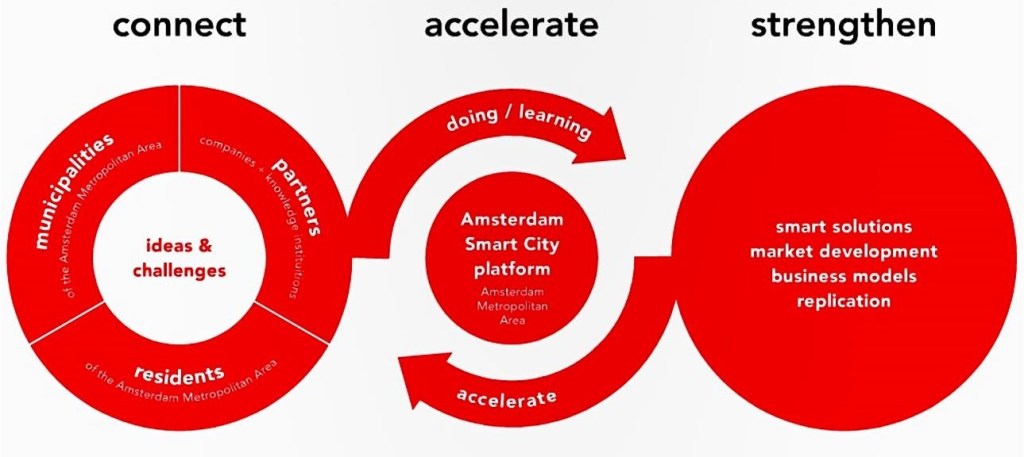
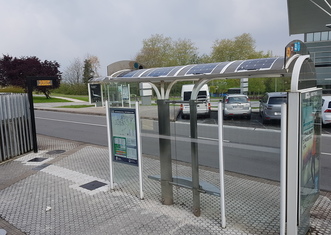
The initial 16 projects launched by ASC managed to reduce energy usage by 13% in the city, working within their main project areas of: sustainable living, sustainable working, smart mobility, smart areas, smart economy, big and open data, infrastructure and living labs (ACS, 2011). Some of the projects include Zonspot: an outdoor workplace, energy derived from solar power with internet access, and Zuidas Solar Challenge: where 3,000 solar panels were built on Zuidas building tops.
Another project by ASC did not have such successful outcomes. Apps for Amsterdam challenged creators to use public data to make apps that enhanced the lives of city residents and tourists. The first app was a public toilet finder. Another app showed users which houses were the best to steal from, using information on street lighting, house price, and distance from police stations (Fitzgerald, 2016).
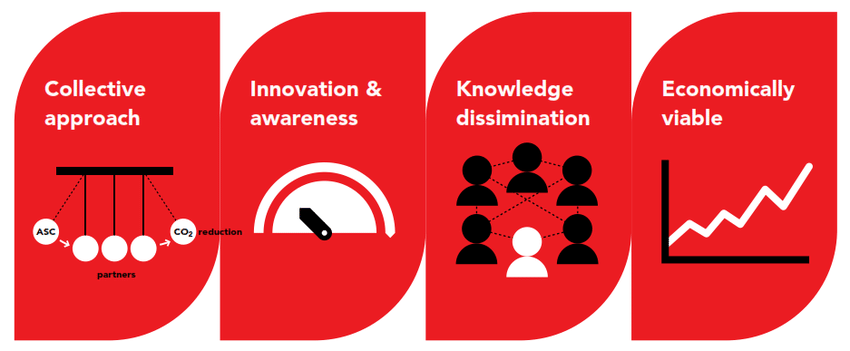
According to Ger Baron, chief technology officer of the city, Amsterdam is still not quite “smart”. Integral to smart city initiatives is the integration of private sector data in order to change policy: citizens are at the heart of these activities (SCIS, 2019). As Amsterdam households were responsible for 33% of CO2 emissions in 2009, one of the most important pillars of ASC is creating awareness to reduce energy consumption in households through smart meters, energy measurement systems, etc. Since no single organization or person coordinates all distinct “smart” efforts, it is truly exemplary of the classic Dutch polder model of citizen participation. The ASC website itself is an interactive platform where entrepreneurs can share their sustainable, innovative businesses or ideas in a community setting.
Amsterdam’s smart city efforts offer insight to the complexities facing city managers when it comes to data opportunity, as it involves a collaboration of a diverse group of stake-holders trying to achieve their own goals. From NGOs, municipality officials, business owners, and all sorts of quasi-governmental or governmental agencies, making Amsterdam smart requires participation from all levels focused on f making Amsterdam sustainable.
Digitalisation of information to improve city life in an ecologically sustainable way encompass two of the driving levers of Amsterdam’s goal to be a Circular Economy, discussed in the next post!
Word count: 503
References
Amsterdam Smart City (2010). Climate street Amsterdam. Amsterdam Smart City. Retrieved April 25, 2020, from https://www.youtube.com/watch?v=g4SoFQkYcmw.
Amsterdam Smart City (2011a). Smart stories. Amsterdam Smart City. Retrieved April 24, 2020, from https://www.youtube.com/watch?v=b27FyhhF5Jk.
Amsterdam Smart City (2011b). 5 new Amsterdam Smart City Projects. Amsterdam Smart City. Retrieved July 25, 2014, from https://www.youtube.com/watch?v=NiXTpLpmVhg.
Amsterdam Smart City (2013). Amsterdam Smart City: Smart stories. Amsterdam Smart City. Retrieved July 25, 2014, from https://www.youtube.com/watch?v=FinLi65Xtik.
Capra, C. (2016) The Smart City and its Citizens: Governance and Citizen Participation in Amsterdam Smart City International Journal of E-Planning Research, Volume 5(1), pp 1-19
European Commission (2018) What are Smart Cities? Accessed on April 9, 2020. Retrieved at: https://ec.europa.eu/info/eu-regional-and-urban-development/topics/cities-and-urban-development/city-initiatives/smart-cities_en
Fitzgerald, M. (2016) Date-Driven City Management: a Close Look at Amsterdam’s Smart City Initiative
Mora L., Bolici R. (2017) How to Become a Smart City: Learning from Amsterdam. In: Smart and Sustainable Planning for Cities and Regions. SSPCR 2015. Green Energy and Technology. Springer, Cham
Putra, Z. (2018). The Interaction Between Non-Government-based Smart City Projects and Government-based Environmental Management: The Case of Amsterdam.
SCIS Editor (2019) ATELIER Smart City project to turn Amsterdam and Bilbao into citizen-driven Positive Energy Districts. Accessed on April 9, 2020. Retrieved at: https://smartcities-infosystem.eu/newsroom/news/atelier-smart-city-project-turn-amsterdam-and-bilbao-citizen-driven-positive-energy
 Urban Political Ecology