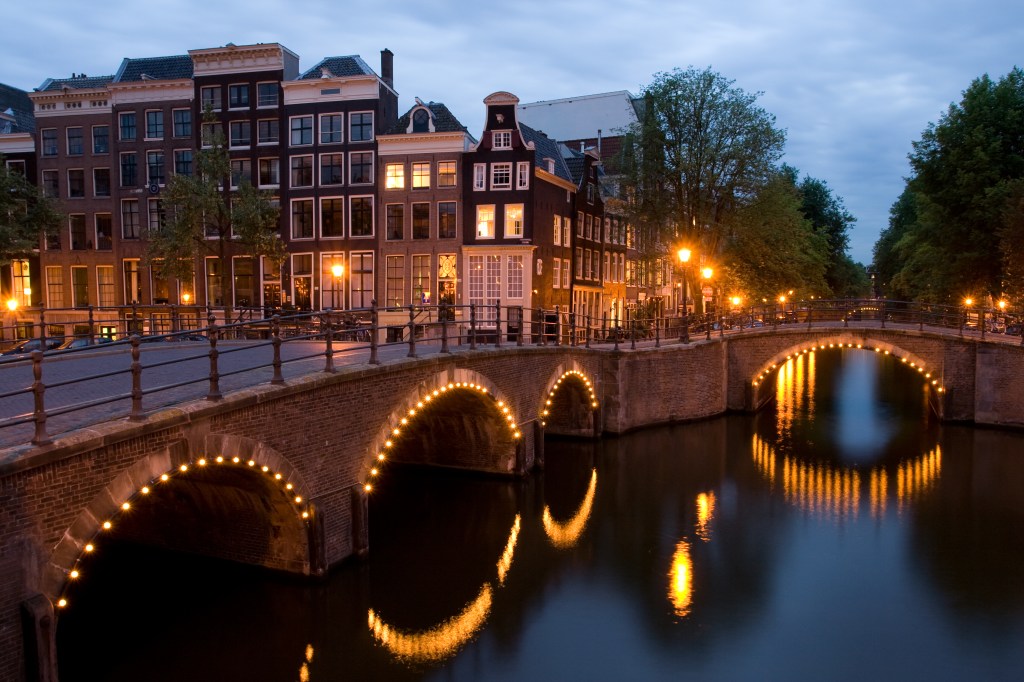
Amsterdam is a unique city. Researching this city employing urban political ecology’s framework allowed me to see how the municipality and city dwellers also think of the ‘tightly woven status of socionature from a critical stance on urban environments’ (Gabriel, 2014:40). Since 2010, Amsterdam’s environmental policy has incorporated the environment and the economy not as mutually exclusive but instead mutually dependent.
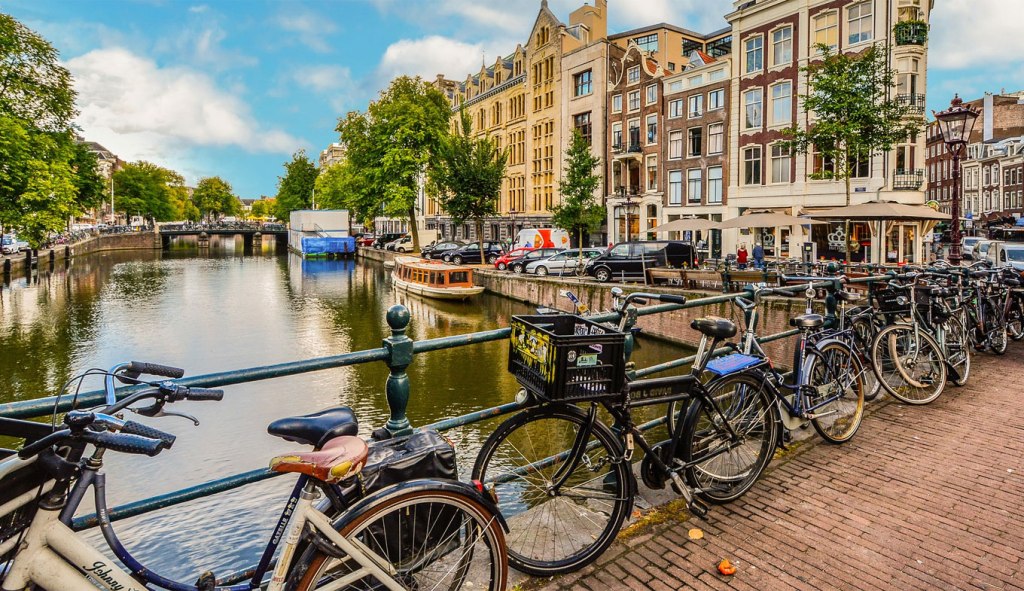
Amsterdam’s focus on becoming an internationally competitive and sustainable European metropolis relies on being a creative city, integrating public transport, high quality urban planning, and investments in recreational green and renewable energy, attainable with the Doughnut model (van der Hoek et al, 2017). It is aided by policies such as:
- ‘The Strategic Vision Amsterdam 2040 Economically Strong and Sustainable’
- ‘Amsterdam: A Different Energy- 2040 Energy Strategy’
- ‘Amsterdam Really Sustainable 2011-2014’
- ‘The Circular Metropolis Amsterdam 2014-2018’ (City of Amsterdam, 2010-2014)
Together these policies created the basis for the city’s focus on effective use of resources, and the transition from linear usage to a sustainable one.
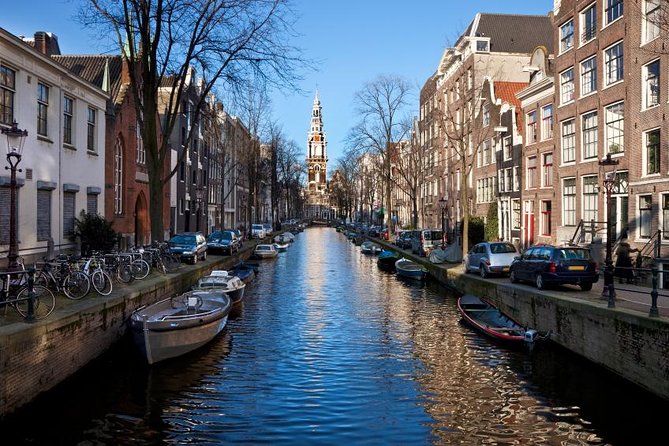
As a result, and as we have analysed in this series of blog posts, the city’s efforts to become ‘smart’ through technological innovation, and the recent commitment to an urban-scale doughnut economy emphasizes an awareness of the dynamics between the human and nonhuman. How the coronavirus pandemic revealed certain societal inequities of race and age, caused certain environmental regulations to be alleviated, but also spurred forward a new sustainable economic plan for the city exemplifies the intricacies of urban life. However, there are many implications of doing so not analysed in these blog posts. Consensus-building is argued as essential in getting all stakeholders on the same page, but it could be said that antagonistic debate is more beneficial to environmental issues, as it prevents them from getting de-politicised and silencing opinions (Rosol et al, 2017). As a framework for each policy, this argument presents many potential critiques to Amsterdam’s governance.
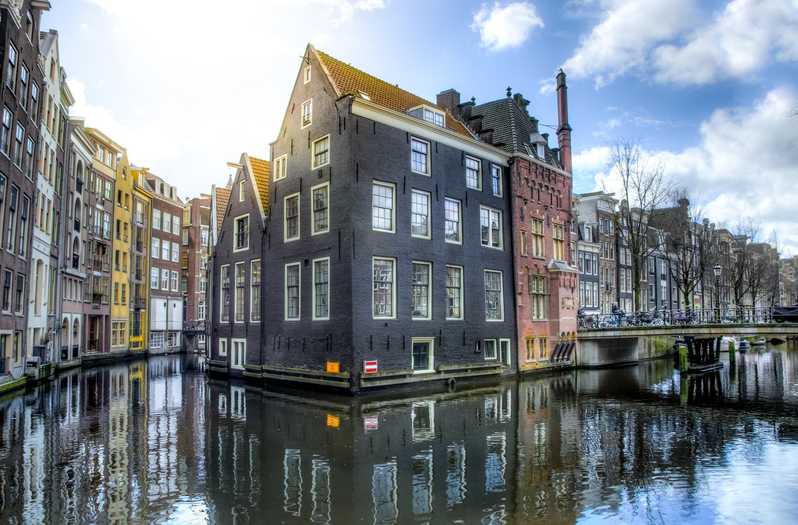
If I had more posts, I would have loved to further investigate how productive this approach has actually been, specifically looking at possible instances of greenwashing. The term sustainability is so open-ended, that it could very well act as an ‘empty-signifier’ not really achieving any ecological beneficial goals (ibid.: 1711).
Regardless, thank you for joining me on this journey looking at how Amsterdam governs its urban space, urban subjects, and urban nature. I learned so much about this city and found myself feeling quite optimistic (only sometimes discouraged) by the municipality’s recent decisions. As UPE certainly allows us to analyse, there is always more than what the eye can see!
Word count: 425
References
City of Amsterdam, 2009. Amsterdam: A Different Energy – 2040 Energy
Strategy. Amsterdam: Report City of Amsterdam, Klimaatbureau
City of Amsterdam, 2010. Structuurvisie Amsterdam 2040 Economisch sterk en duurzaam (Structural Vision Amsterdam 2040 Economically strong and sustainable). Amsterdam: Report City of Amsterdam, Physical Planning Department.
City of Amsterdam, 2011. Amsterdam Beslist Duurzaam – Duurzaamheids programma 2011/2014 (Amsterdam Really Sustainable – Sustainability Program 2011/2014). Amsterdam: Report City of Amsterdam.
City of Amsterdam, 2014. De Circulaire Metropool Amsterdam 2014–2018 (The Circular Metropolis Amsterdam 2014–2018). Amsterdam: Report City of Amsterdam.
Gabriel, N. (2014). “Urban Political Ecology: Environmental Imaginary, Governance, and the Non-Human.” Geography compass 8(1): 38-48.
Rosol, M., Béal, V. and Mössner, S. (2017) ‘Greenest cities? The (post-)politics of new urban environmental regimes’, Environment and Planning A: Economy and Space, 49(8), pp. 1710–1718
van der Hoek, J., Struker, A. & de Danschutter, J. (2017) Amsterdam as a sustainable European metropolis: integration of water, energy and material flows, Urban Water Journal, 14:1, 61-68
 Urban Political Ecology