Welcome to my blog! In the next series of posts I will be critically examining the urban environmental struggles being faced in Las Vegas, whilst playing close attention to the political and social repercussions that these have.
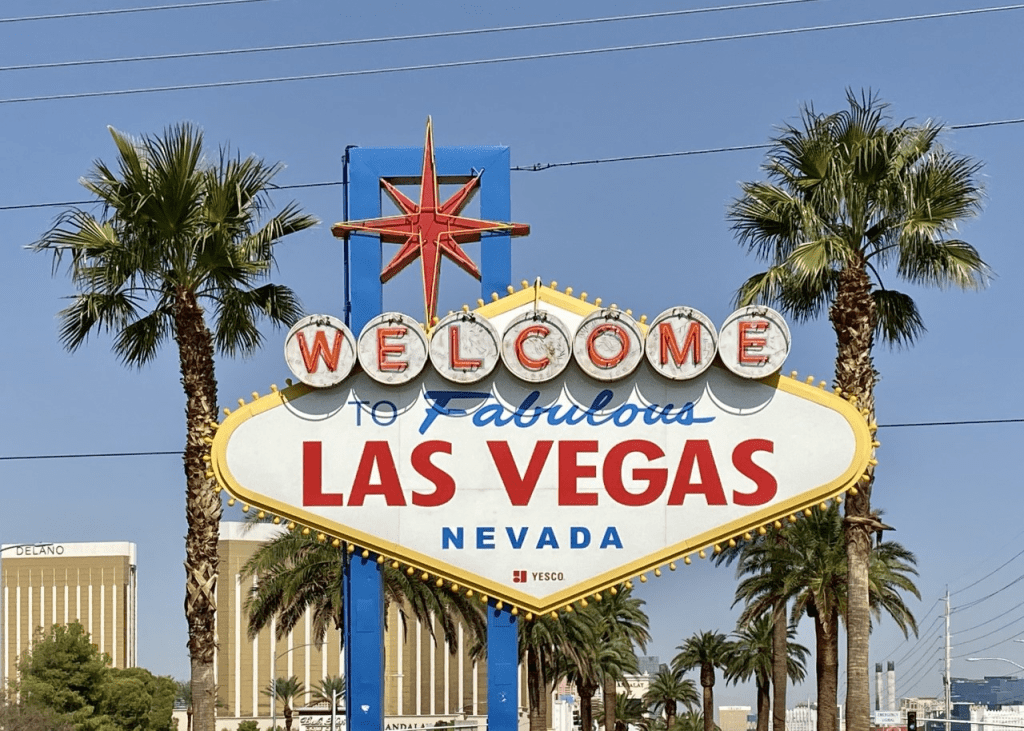
Image 1, The Las Vegas sign (taken by myself, 2019)
Located in the state of Nevada, Las Vegas is the most populated city within the state.(US Census Bureau, 2018). Las Vegas (or Vegas as it is simply known) is one of the most popular tourist destinations in the world, with people coming from far and wide to visit the city’s mega casino-hotels, world renowned eateries and luxury designer shopping villages.
I have chosen to base my blog on Las Vegas as it is one of my favourite cities to visit in the world. After researching it thoroughly I have found that it faces a host of issues, often these issues have a disproportionate impact on the poorest in the city – this is in agreeance with Heyen (2014), that social unevenness in a city can be uncovered through looking at its urban political ecology.
Nature and society are bound more so than ever. This hybrid of the social and the natural has created the modern day city (Swyngedouw, 1996). Expect to see posts on a variety of issues both contemporary and some historical! Air pollution, water management, waste management and long term impacts of nuclear testing are just some of the themes to be covered!
Word Count: 232
Reference:
Heynen, N. (2014) Urban political ecology I: The urban century. Progress in Human Geography 38(4): 598-604
Swyngedouw E (1996) The city as a hybrid: On nature, society and cyborg urbanization. Capitalism Nature Socialism 7(2): 65–80
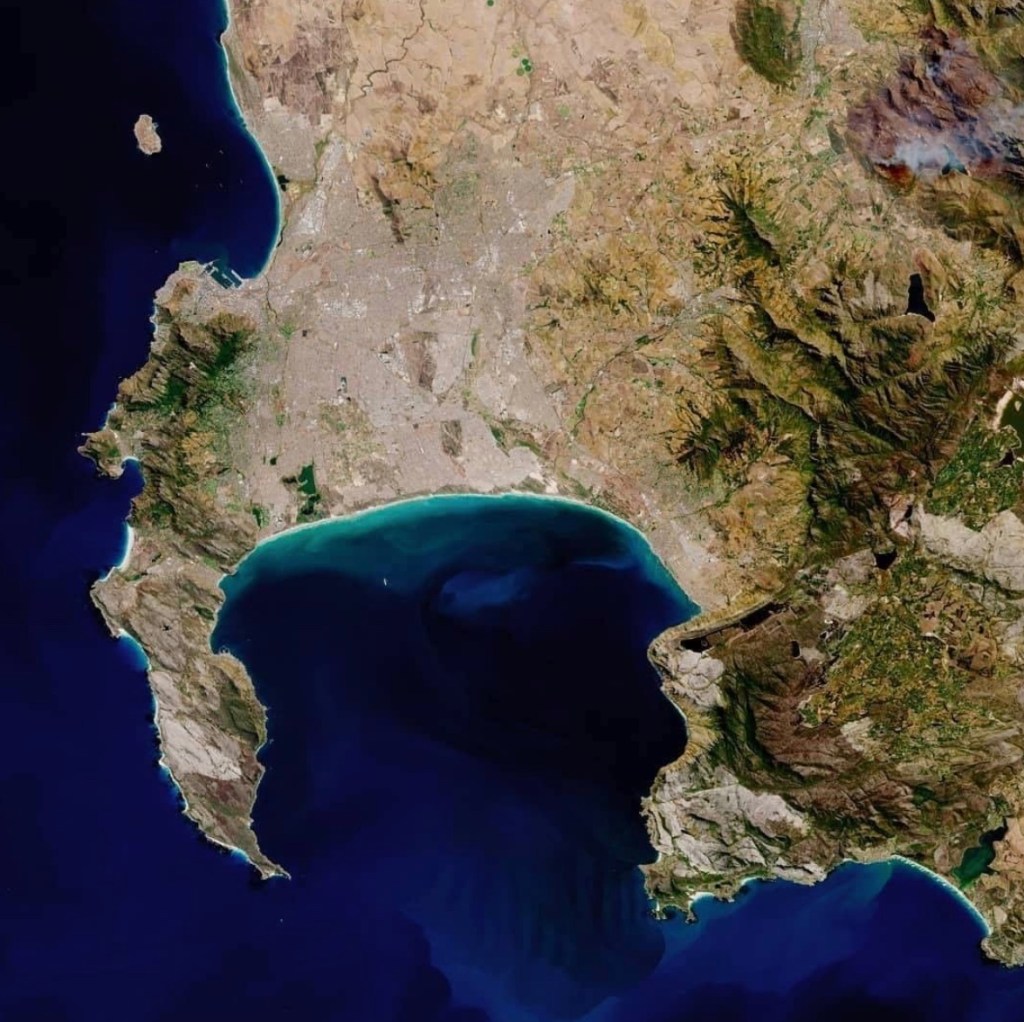
Figure 1: Aerial View of Cape Town from space. (capetownetc, 2020)
Welcome to my blog on the city of Cape Town. I will be posting a variety of entries over the next term, which will examine the city through an urban political-ecological (UPE) lens. I will critically explore a wide range of issues facing the city to develop a narrative into how urban metabolisms shape everyday life in Cape Town.
Cape Town is a port city in South Africa which was developed by the United East India Tea Company (Wilkinson, 2000). With a population of just over 4 million people and a municipality area of 2461km2, Cape Town is the largest city within the Western Cape (WCP, 2017) (City of Cape Town, 2011).
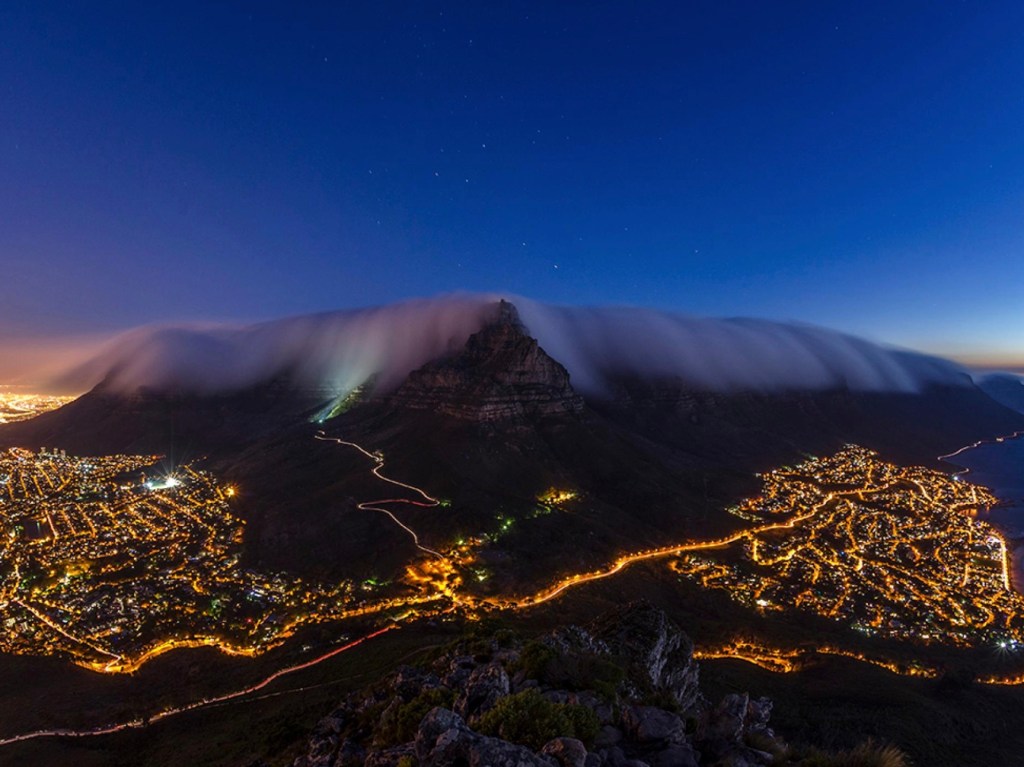
The city is situated in a biodiversity hotspot and the natural setting of the Cape Floristic Region, making it one of the most biodiverse cities of the world (Cilliers et al., 2012). A city of stunning physical beauty, Cape Town showcases rich and diverse flora and fauna, and beautiful landscapes, including Table Mountain and the Cape Point (Figure 2).
Figure 2: Cloud cover over Table Mountain. Source: (Wainwright, 2015)
A UPE account will go way beyond the simplistic forms of nature living within the city. A UPE account will go way beyond the simplistic forms of nature living within the city. Let’s explore beneath the beauty and examine the flows and interactions between people, the city and environment. Carefully examining the different metabolisations at work in Cape Town will expose the often invisible societal, environmental and political processes in operation, and the consequences which they produce (Swyngedouw et al., 2003).
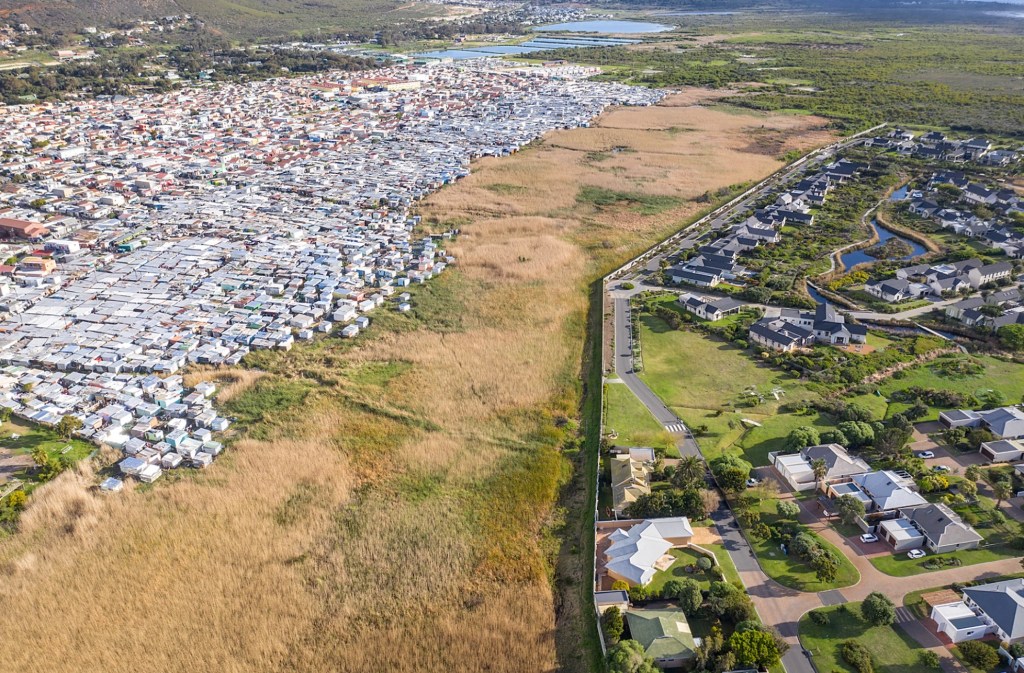
Cape Town is deeply entangled in a history of colonialism and apartheid. Centuries of Cape Town is deeply entangled in a history of colonialism and apartheid. Centuries of British and Dutch rule have driven racial segregation and inequalities within the city. During apartheid, segregation was issued as a policy, which created deeply uneven landscapes throughout the city, which still exist today. In many areas of Cape Town, densely populated townships and spacious affluent neighbourhoods’ live side by side (Figure 2). National census data estimates that 218,780 households are living in informal settlements which represent 21% of households in Cape Town (Stats SA, 2011a).
Figure 3: Neighbouring areas of Masiphumelele and Lake Michelle. Source: Unequal Scenes, Miller, 2018
UPE draws attention to the socio-spatial and environmental processes of uneven geographic development and recognises that material conditions are controlled and manipulated to benefit more affluent social groups while negatively affecting more marginalised groups (Heyen, 2014). Cape Town, “a neoliberalising post-apartheid city with a developmental state” (McDonald, 2012) is an incredibly complex site which opens up numerous questions of inequality, environmental justice, struggle and power relations. I am curious to explore the relationship between people and nature in Cape Town through a variety of ecological and political issues, and ask the critical questions of “why (…) ‘things as such’ [are] produced in the way they are – and to whose potential benefit” (Kirsch and Mitchell 2004 in Swyngedouw 2006b, 29).
Aisling Friel – 469 words
References:
Cilliers, S. and Siebert, S. (2012). Urban Ecology in Cape Town: South African Comparisons and Reflections. Ecology and Society, 17(3).
Heyen, N., Swyngedouw, E. and Kaika, M. ed., (2006). Metabolic urbanization. The making of cyborg cities. In: In the nature of cities. Urban political ecology and the politics of urban metabolism. London, New York: Taylor and Francis, pp.21-40.
Heynen, N. (2014), “Urban political ecology I: The urban century.” Progress in Human Geography, 38(4)
McDonald, D. (2012) World city syndrome: Neoliberalism and inequality in Cape Town, London: Routledge.
Stats SA (2011). South African national census: Western Cape Municipal report. Pretoria: Stats SA.
Swyngedouw, Erik & Heynen, Nik. (2003). Urban Political Ecology, Justice and the Politics of Scale. Antipode. 35. 898 – 918. 10.1111/j.1467-8330.2003.00364.
Western Cape Government (2017). Socio-Economic Profile: City of Cape Town. Cape Town: Western Cape Government.
Wilkinson, P. (2000). City profile: Cape Town. Cities, 17(3).
Over the next series of posts I will be providing some critical insight into the way in which a city and its people, its government, and resources try and deal with the environmental issues that they face on a day to day basis.
The blog will focus on contemporary issues that are facing the city on a as-near-to-possible real time basis, but some reference to historical issues and the ways in which they were dealt with will be reflected upon at times.
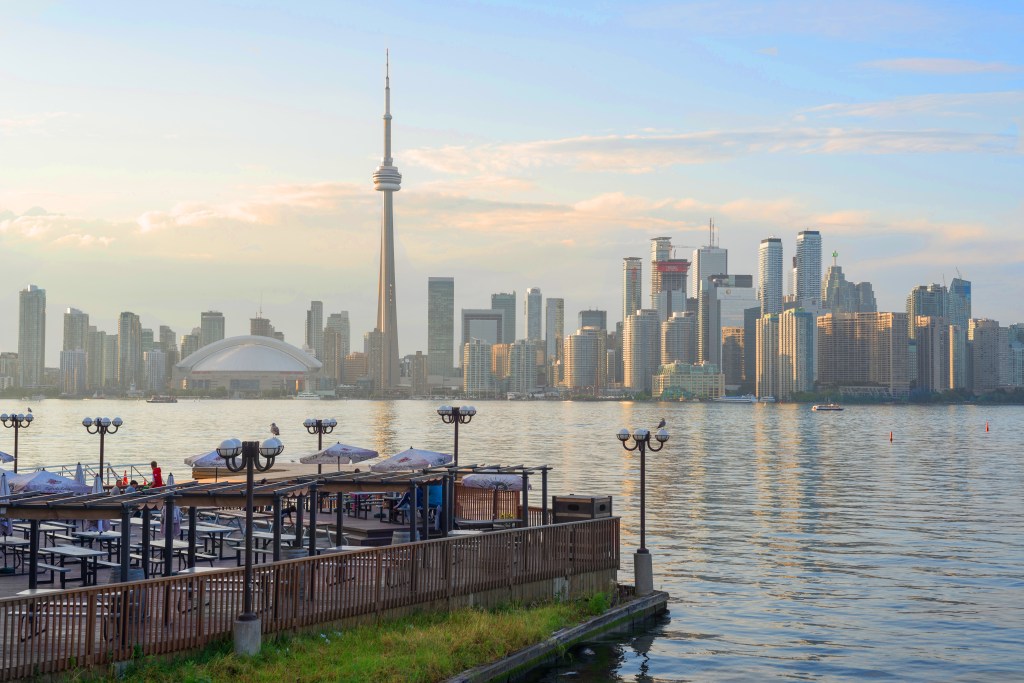
Downtown Toronto. A. Vagen (2017) ‘Toronto seen from Toronto Islands’, Own Work.
My inspiration for choosing Toronto as the city for my research is based upon two elements. First of all, it is a city that I have previously visited during my childhood, and one where several members of my extended family have lived and currently reside. An interest in the city has thus remained since a young age, with this blog being the apt opportunity to explore the city in more detail, with a geographical perspective and understanding. Secondly, Toronto is the most populous city in Canada, with over 2.7 million residents as of 2016 (Statistics Canada, 2017). As well as a large population, the city is also a globally significant city, ranked Alpha by the Globalisation and World Cities Research Network’s classification (GaWC, 2018). This means that it is considered to be economically and culturally critical in a global context, with diversified industries in technology, banking and finance, education, the arts and tourism. It is expected that over 43 million tourists visit the City every year (City of Toronto, 2019).
The combination of a globally significant city that is considered to be highly developed, high levels of tourist interactions and similarities across Western society, means that the analysis that I will be conducting throughout this series of blogs can be comparative between cities that in statistics seem to be similar. In the sense of urban political ecology study, it is fair to say that from afar Toronto appears to fit the discourse of the Western, developed city, which has few infrastructural and environmental concerns. However, it may turn out that through deeper consideration, that there are issues that any city could face, whether they be located in the Global North or South, developed or developing.
Another key factor to consider is the diversity that characterises Toronto. More than 20% of the population belong to a visibly minority group, with over 200 countries’ ethnic origins being represented within the city, and 160 languages (City of Toronto, 2015). Toronto thus provides a potential urban political ecology lens for which critical analysis can be undertaken. Within a city of many users, and many differing ideals of service provision and futures, contestations are likely to occur between individuals, communities, governance and businesses, with power struggles existing between them. Toronto’s high levels of urbanisation and development means that there are high levels of flows through the city and high levels of ‘urban metabolism’.
There is a complex relationship between ‘nature’ and ‘cities’, one that is deeply politicised (Heynen, 2014), which will be explored throughout this series of blog posts, ranging from topics ranging from air pollution to water provision, to provide just two examples. Each blog will set the scene and then discuss an environmental issue critically through an urban political ecology lens.
https://www.torontoenvironment.org – Toronto Environmental Alliance, a non-profit organisation that acts a watchdog and campaigner that advocates on behalf of, and encourages engagement from, Torontonians.
 Urban Political Ecology