Water is a basic human need, critical to life, agriculture and industry. An indispensable element, yet almost two years ago Cape Town was poised to become the first major city in the world to run out of water.
I want to begin with an exploration of the metabolic flow of water throughout Cape Town. Water is not just a simple element involved in the production of cities. Water encompasses continuous metabolic processes, which include different actors at various scales (Gandy, 2004). Water connects and disconnects, comes and goes, enables and prevents. In Cape Town, water connects people to both visible and invisible entities within the city including infrastructure, and capital flows, through multiple networks of knowledge, technology and political systems (Swyngedouw 1996). However, in Cape Town water also disconnects and prevents, reinforcing the entrenched inequalities.
Climate change triggered an unprecedented drought in South Africa’s Cape. The dry climate combined with rapid urbanisation and high per capita water consumption drove the city to crisis. Following three years of drought, dam levels had dropped to just 20%, and in early 2018 the South African Government announced that day zero was looming. Day zero became the rather apocalyptic name for the moment when water dam levels would drop to 13% and water systems across the city would be turned off (Enqvist et al., 2018).
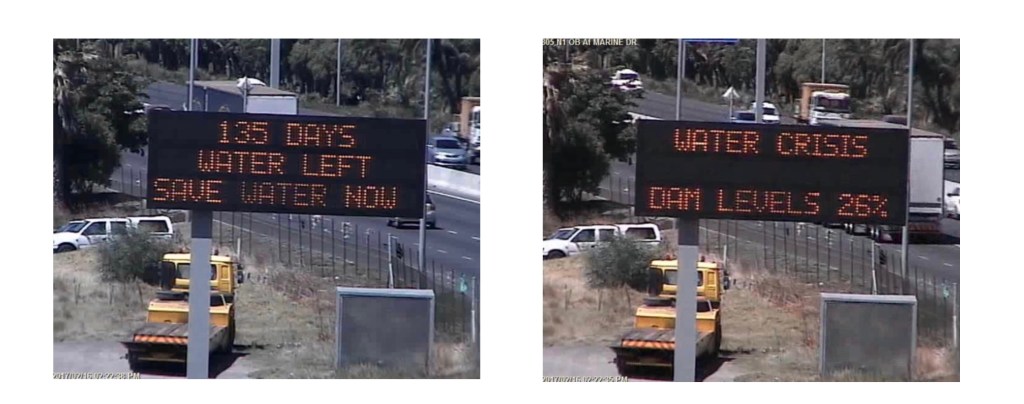
Figure 1: Signs warning Capetonians of impeding water disaster. Source: SA People News 2017
The water crisis raised extreme concern about the state of Cape Town’s water supplies, but it has also magnified the overarching problems of inequality and injustice across the city. Everyday struggles and practices of water acquisition within the city’s informal settlements were to some invisible. For many residents of the cities sprawling townships, water has always been scarce, and throughout the drought, conditions were no different.
In January 2018, the government implemented level 6 water restrictions which consisted of many new water regulations including a controversial drought levy which would fine excessive water users. Fortunately, after much public outcry, the levy was dropped. However, the City of Cape Town introduced a higher fixed monthly tax on water (Parks et al., 2018). This process outlines how water, a public good, is being treated as a vendible commodity in the city.
Crisis Averted
The video above emphasises the steps taken to reduce water usage in the city. Local authorities and community members transformed unsustainable water practices and proved that communities can accomplish behavioural shifts. The government established numerous partnerships to educate and provide information about water conservation practices. For example, Sanlam partnered with the city of Cape Town to release an album of 2-minute shower songs to help cut down water use. Moreover, a “city water map” was established in January 2018, which named and shamed those who were not sticking to the water restrictions of 87 litres per person (Sinclair-Smith et al., 2018).
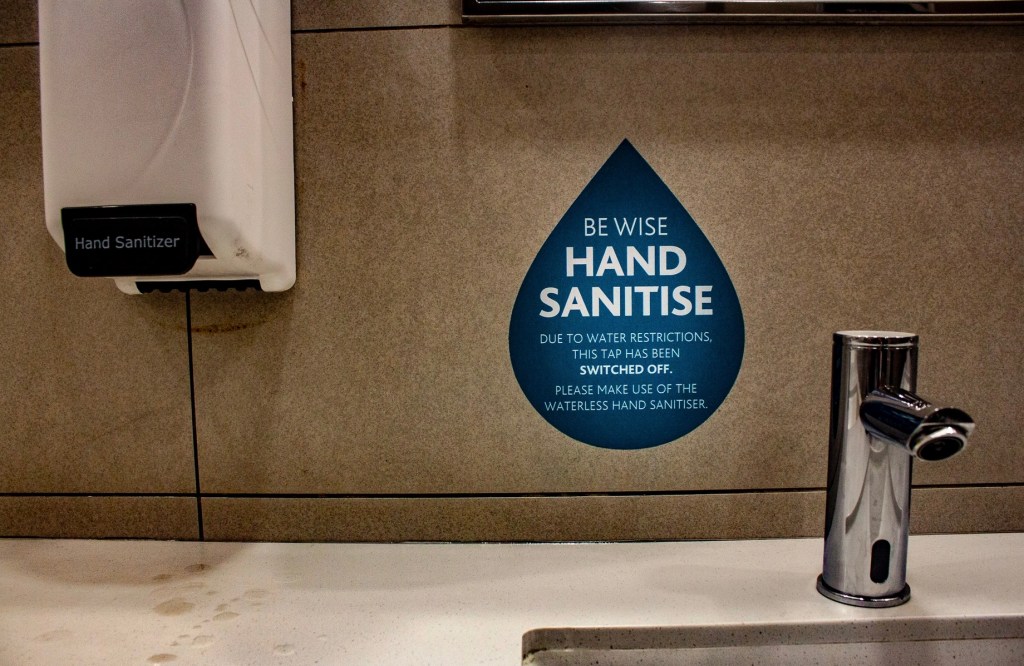
Figure 2: Sign indicating that the water tap has been switched off due to water restrictions. Source: (Walton, 2018)
So how does Gandy’s urban metabolic perspective of water help us to understand Cape Town’s water crisis? This analogy can help us analyse the city’s metabolic responses to the diminishing supply of water. The city came together to overcome the disaster. The city took drastic measures and implemented quick emergency fixes, exhibiting a short term reactionary metabolic response.
Although the crisis was averted and the taps kept running, day zero remains a reality for many of the poorer residents living in the Cape’s informal settlements. There is a direct link between unequal access to resources and the economic inequalities entrenched within the city, lying within the racially segregated areas developed throughout apartheid.
Many cities can learn lessons from Cape Town’s experience. This crisis reveals how cities must improve their resilience strategies to prevent future emergencies. Moreover, governmental policies should focus on improving the infrastructure of those residing in informal settlements which are at higher risk.
Aisling Friel – 690 words
References
Gandy, M. (2004) ‘Rethinking urban metabolism: water, space and the modern city’, City, 8, 363-376.
Enqvist, J. and Ziervogel, G. (2019). Water governance and justice in Cape Town: An overview. Wiley Interdisciplinary Reviews: Water, p.e1354.
Parks, R., Mclaren, M., Toumi, R., Rivett, U., 2019. Experiences and lessons in managing water from Cape Town. London, England.
Sinclair-Smith, K., Mosdell, S., Kaiser, G., Lalla, Z., September, L., Mubadiro, C., Rushmere, S., Roderick, K., Brühl, J., McLaren, M. and Visser, M., 2018. City of Cape Town’s Water Map. Journal – American Water Works Association, 110(9), pp.62-66.
Swyngedouw, E. (1996) ‘The city as a hybrid—on nature, society and cyborg urbanisation’, Capitalism, Nature, Socialism, 7, 1, 65–80.
Figures:
Figure 1: SAPeople – Your Worldwide South African Community. (2017). Cape Town Gets VERY Serious About Water Restrictions – SAPeople – Your Worldwide South African Community. [online] Available at: https://www.sapeople.com/2017/02/16/cape-town-gets-serious-water-restrictions/
Figure 2: Walton, B. (2018). How Cape Town Plans to Avoid Another Brush With ‘Day Zero’ – CityLab. [online] CityLab. Available at: https://www.citylab.com/environment/2018/07/how-cape-town-got-to-the-brink-of-water-catastrophe/564800/
 Urban Political Ecology
Thank you for the insight! It is scary to see Cape Town struggle with water. At the same time, I feel like the city has shown resilience as the city came together to pass by Day Zero. My case study, Foz do Iguaçu, seems to be currently approaching that state of water scarcity; however, as a rather small city, I wonder if it will have the political power and resources needed to organise itself in a similar manner. When speaking about climate change, I think it is important to discuss smaller cities that seem to be in the peripheric view of the international agenda. Amidst climate change, unfortunately, environmental racism seems to be proving itself as an increasingly predominant urban challenge.
LikeLiked by 1 person
Thank you for the comment. It is incredibly challenging for cities like Cape Town to tackle climate-related problems when the city experiences such high levels of inequality and injustice. I agree, smaller cities like your case study, Foz do Iguaçu are missing from academic research and conversation. We must pay more attention to these cities as they could benefit significantly from international support. Although Foz do Iguaçu is a much smaller city than Cape Town, it could learn a lot from their experience. In the face of disaster, the community pulled through. Resilience is extremely dependent on the will and determination of the citizens to work together.
LikeLike