The three-year drought drew widespread attention to the city’s water supply. The city’s relation with water, however, has always been complex. Cape Town still faces the ever-existing problems of racial inequality and state-led discrimination which deprive many residents of public amenities. Through an examination of water management devices, we can observe how urban metabolisms can serve elites at the expense of marginalised social groups with less agency (Swyngedouw and Heynen, 2003).
Water Management Devices (WMD)
A WMD is programmed to provide a daily allocation of water to use on your property (City of Cape Town, 2017) and, they will switch off the water, once the daily allocated amount has been used (Figure 1). WMDs were a key strategy in Cape Town’s water demand management plan (WCWDM, 2007). Water supply is restricted to 350 litres per day in all homes using WMDs, despite the size of the household. The city installed 250,000 WMDs during the drought, of which 64% were fitted in poor neighbourhoods (Mahlanza et al., 2016). The disproportionate installation process of WMDs in poorer households has been described as unjust and punitive (Wilson and Pereira, 2012). WMDs have been critiqued for numerous reasons and have driven complaints and protests among many social groups. Many people did not fully understand how to use WMDs as many residents were not consulted or educated about the devices. Moreover, WMDs prevent people from fulfilling their water needs and interfere with people’s daily lives. One resident of the Dunoon township described how he had to juggle many tasks to ensure their family would have sufficient water supply, which compromised their quality of life and dignity;
“The running out of water is a big disadvantage. I have a three-year-old daughter, so when she wants to use the toilet to relieve herself and there’s no water to flush with, there’s nothing I can do… I have to take her to the bush” (Mahlanza et al, 2016).
Households who require more than the 350 litres can apply for more water, given that they can afford the additional supply (CCT 2009). This raises another UPE issue. Water a basic need is treated as an economic commodity which can be bought and sold (Page, 2005). Cape Town’s urban dwellers are treated as customers rather than human citizens with basic rights to resources (Gandy, 2004). Citizens of the informal settlements were extremely angered by the regulations imposed on water. Residents gathered to the streets of Cape Town in protest chanting;
“You cannot make a profit out of water; water is necessary for life. It does not mean if you don’t have money you can’t get water. We must provide water for everybody and it must be free” (The Atlantic, 2019).
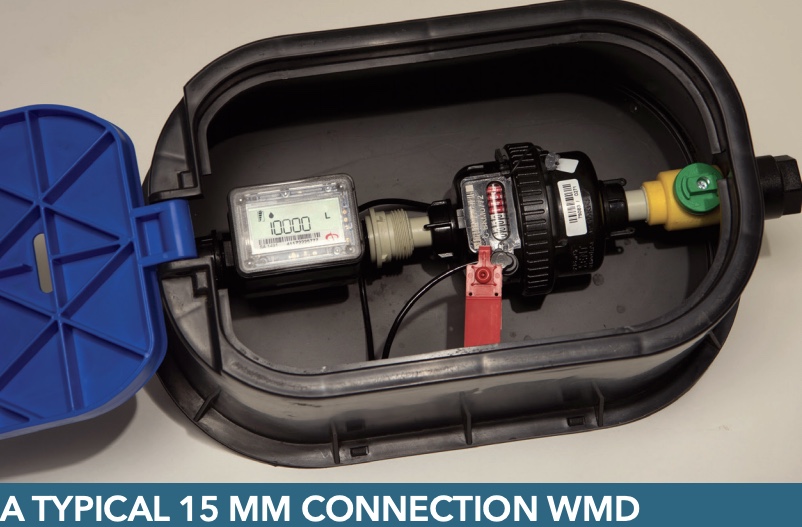
Figure 1: 15mm WMD. Source: (City of Cape Town, 2017)
Cape Town is sailing away from its apartheid past in which informal settlements and non-white areas did not have equitable access to resources. The government has aspired to address the inequalities and injustices within the city. The city has implemented legislation to manage and conserve water and also to address the socio-economic challenges facing the city (Funke et al., 2007). The South African Constitution of 1996 states that access to clean water is a human right, and the government has sought to democratise this public necessity.
The government, however, has formed private partnerships to improve the efficiency and distribution of water services (Smith, 2001). Through the implementation of neoliberal cost recovery* policies, including water cut-offs and underinvestment in infrastructure, the city is reproducing apartheid legacy inequalities (Smith and Hanson, 2003). Power relations are embedded in Cape Town’s development, and the resulting social disparities in access to water and other resources highlights how efficient economic growth comes at the expense of equity.
Examining practices of water supply and distribution through a UPE lens reveals how the city and nature are inherently intertwined. We can see how water is not just a key element in the production of cities; it is part of broader processes and practices of power, justice and agency. In Cape Town, it is a controlled and manipulated body which is perpetuating inequalities and injustice.
As Cape Town’s population continues to increase and climate-related events accelerate, the government faces enormous challenges in managing this complex city. Although neoliberal policies may be useful in making services more efficient, they generally come at the expense of the urban poor. This middle-income city, the legislative capital of South Africa with sufficient financial resources, can address poverty and inequality. The government needs to adopt a collaborative, inclusive and systematic management plan which speaks to residents from all walks of life. Water may have been the focus of this blog. However, the issues of justice and inequality are prevalent across multiple resources in Cape Town (MacDonald et al., 2002a).
*Cost recovery processes involve charging customers for services including water and electricity to recover all or most of the cost of service provision (McDonald, 2002b)
Word Count: 816
References
CCT (City of Cape Town). (2009). Constitution of the Republic of South Africa, No 108 of 1996. 1996. http://www.westerncape.gov.za/legislation/constitution-republic-south-africa.
Gandy, M. (2004) ‘Rethinking urban metabolism: water, space and the modern city’, City, 8, 363-376.
Mahlanza, L, Ziervogel. G. and D. Scott (2016) ‘Water, Rights and Poverty: an Environmental Justice Approach to Analysing Water Management Devices in Cape Town’, Urban Forum, 27, 1, 363-382.
Mcdonald, D. A. (2002a) The theory and practice of cost recovery in South Africa, in: D. A. Mcdonald and J. Pape (Eds) Cost Recovery and the Crisis of Service Delivery in South Africa, pp. 17–37. HSRC Pretoria, ZED and the Municipal Services Project, Pretoria.
Mcdonald, D. A. and Pape, J. (Eds) (2002b) Cost Recovery and the Crisis of Service Delivery in South Africa. HSRC Pretoria, ZED and the Municipal Services Project, Pretoria
Page, B., 2005. Paying for water and the geography of commodities. Transactions of the Institute of British Geographers, 30(3), pp.293-306.
Smith. L. (2001) ‘The Urban Political Ecology of Water in Cape Town’, Urban Forum, 12, 2, 204-224.
Smith, L., & Hanson, S. (2003). Access to water for the urban poor in cape town: where equity meets cost recovery. Urban Studies, 40(8), 1517–1548.
Swyngedouw, E. and Heynen, N., 2003. Urban Political Ecology, Justice and the Politics of Scale. Antipode, 35(5), pp.898-918.
The Atlantic (2019) Countdown to Day Zero: Cape Town’s Water Crisis. Available at: https://www.youtube.com/watch?v=EZmxEY6QoUY&t=412s (Accessed: 2nd February 2020)
WCWDM Strategy (2007). City of Cape Town, long term water conservation and water demand management. https://www.capetown.gov.za/en/Water/WaterservicesDevPlan/Documents/WSDP_2012_2013/Topic8_ WCWDM_STRATEGY_2.pdf.
Wilson, J. & Pereira, T. (2012). Water Demand Management’s Shadow Side: tackling inequality and scarcity of water provision in Cape Town. Proceedings of the conference Strategies to Overcome Poverty and Inequality Conference. Towards Carnegie III^. 3–7 September 2012. University of Cape Town.
Figures:
Figure 1: City of Cape Town (2017). GUIDE TO WATER METERS AND WATER MANAGEMENT DEVICES. Cape Town: City of Cape Town.
 Urban Political Ecology
Very interesting discussion on water provision in Cape Town, and interesting insights on how this is a pattern of issues of social justice and inequality in resource provision. Neoliberal policies do not do the urban poor justice, but at the same time, the municipality seems so fragmented. I completely agree with you that the government must adopt a more inclisive and collaborative systematic management plan!
LikeLiked by 1 person
Good discussion on water provision and very topical with the links to climate change and the challenges that may be faced in the future. Commodifying the supply of water through neo-liberal policies like many cities is sure to disadvantage the poorest – I like how you have linked this to reproducing the apartheid legacy.
LikeLiked by 1 person