In my first blog, I discussed the stark inequalities between the informal settlement of Masiphumelele and the Lake Michelle gated eco-estate. Gated communities in South Africa have begun to brand themselves as eco-estates, and nature estates. The Noordhoek mountains of Cape Town are currently transforming into green eco-estates which serve the needs of the affluent populations of the city. The proliferation of eco-estates has been an increasingly prominent form of development across the world, and they have become progressively popular within South Africa. These lucrative, luxury and lavish estates lie on the pristine urban edge creating a safe and secure environment. To top it off the estates provide a green and sustainable lifestyle.
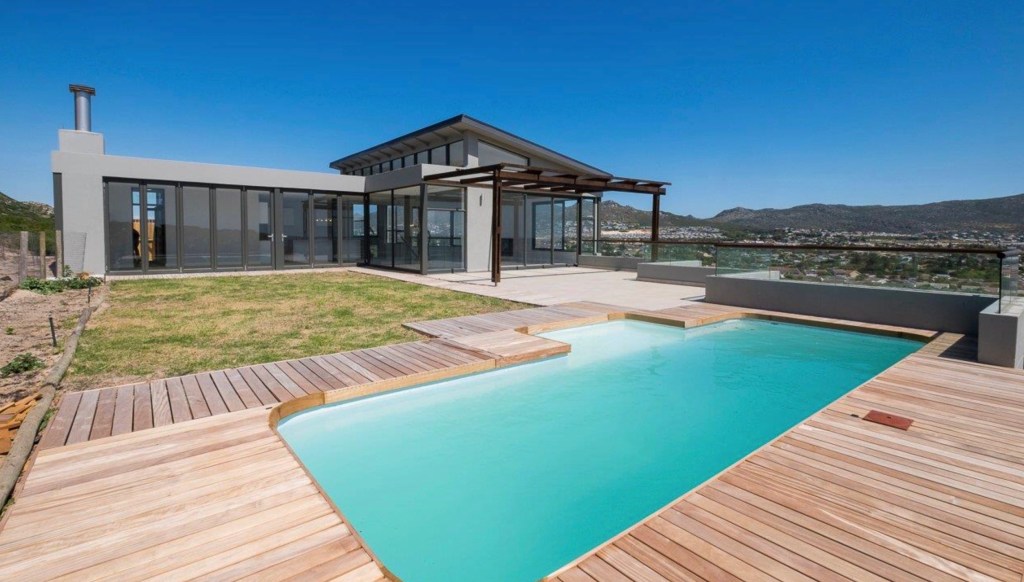
Chapman’s Bay Estate is an eco-estate situated in the Noordhoek mountains of Cape Town. 3-metre-high perimeter fences surround the estate, and CCTV cameras are on the connecting poles. Figure 1 presents one of the modern and luxurious houses on offer within the beautiful setting of Lake Michelle. Three private companies lead the development of the Chapman Bay Estate, including Greef properties (Baigrie and Ernstson, 2017). The video attached is a promotional clip created for the Chapman Bay Estate (Figure 2). The population of Cape Town consists of 42.4% coloured, 38.6% African Black, 1.4% Asian, 1.9% other and 15.7% white (Lehohla, 2012). Yet, the video only shows white people and families smiling and enjoying the premium lifestyle.
Nature
The marketing and consumption of nature is a distinguishing feature in the formation of eco-estates. Nature is entwined with the city. A team of world-renowned environmental impact specialists, ecologists and fynbo experts are working together to ‘build’ an intricate eco-system (CBE, 2019). The use of native and indigenous plant species is a common feature in the landscape design of gated estates. The Chapman Bay website describes how the “natural wetlands are being preserved and enhanced to protect the endangered Leopard Toad” and the estate will additionally be “designed to cater specifically to the needs of the natural fynbos, which is part of the Cape Floral Kingdom” (CBE, 2019). However, the reality is not so picture-perfect. These estates hide the large-scale destruction of vegetation and habitats which is central to their design and development. Nature is neglected, removed, recreated and replaced by more attractive and ascetically pleasing forms of nature. This new nature has numerous functions within the city, primarily helping to sell properties within the eco-estates, but it is also contributing to a larger movement towards sustainable development.
Protect and Exclude
These estates are wrapped in a language of sustainability and conservation which brush over concerns about social and environmental justice. The developers promote these estates as sustainable, utopian enclaves sat in the heart of nature, and they are selling out fast. The success of the Chapman Bay project has been attributed to environmental friendliness and a common desire to do things right. These estates claim to be protecting nature and doing good, but this is, of course, not the case.
Remove the greenwashing, and it is clear that the estate protects the wealthy from the uncomfortable and unpleasant reality of the Masiphumelele neighbourhood, a common occurrence in South Africa. Wealthy suburbanites are allowed to escape the diverse and dangerous post-apartheid city and reunite with nature. Homeowners can live safe and peaceful lives in a protected estate while feeling proud and kind as they are ‘protecting the environment’. Residents are separated from the broader realities of urban life and live out a ‘geographical escapism’ (Ballard and Jones, 2011). Residents will have access to a wide range of amenities, including a shopping mall which is also marketed as green and eco-friendly (McCain, 2015).
This estate represents a microcosm of the larger problems of social justice and environmental fragmentation within Cape Town. The production and consumption of eco-estates reproduce inequalities. Protected by stainless steel and electric, I think it is evident that these estates are built to exclude.
Word Count: 671
References:
Ernstson, H. and Baigrie, B. (2017). Noordhoek eco-estates protect the rich from the reality of Masiphumelele. GroundUp.
Estate Living. (2020). Chapman’s Bay Estate | Estate Living. [online] Available at: https://www.estate-living.co.za/news/chapmans-bay-estate
Ballard, Richard and Jones, Gareth A. (2011) Natural neighbours: indigenous landscapes and ‘eco-estates’ in Durban, South Africa. Annals of the Association of American Geographers, 101 (1). pp. 131-148. DOI: 10.1080/00045608.2010.520224
Chapmansbay.co.za. (2019). Chapman’s Bay Estate. [online] Available at: http://www.chapmansbay.co.za/index.html
Lehohla, P., 2012. South African Statistics, 2012. [online] Cape Town: Statistics South Africa. Available at: <http://www.statssa.gov.za/publications/SAStatistics/SAStatistics2012.pdf> [Accessed 1 March 2020].
Mccain, N. (2015). New mall in time for Christmas. News24. [online] Available at: https://www.news24.com/SouthAfrica/Local/Peoples-Post/New-mall-in-time-for-Christmas-20150601
Figures:
Figure 1: Property24. (2020). 4 Bedroom House to Rent in Chapman’s Bay Estate. [online] Available at: https://www.property24.com/to-rent/chapmans-bay-estate/noordhoek/western-cape/16016/108506466
Figure 2: GreeffPropertiesSA, 2014. Chapman’s Bay Estate – Greeff Properties. Available at: <https://www.youtube.com/watch?v=or08xWKib_0> [Accessed 6 March 2020].
 Urban Political Ecology
Similarly to your comments on Cape Town, it could argued that there is a growing divide between communities in Toronto, and the ways in which nature is utilised and shaped can be one example of this. My post on urban nature and green rooftops in Toronto finds similar sort of conclusions, in that large office spaces and high-end apartment blocks increasingly have green spaces readily available to its inhabitants, in contrast in to areas of higher deprivation typically housing ethnic minorities. It will be interesting to see if any policies are brought in to encourage developments in areas that are not as affluent, both in the case of Toronto and Cape Town.
LikeLiked by 1 person
Thank you for your comment. Cities must rethink their development patterns. Wealthier areas are continuously prioritised. More space and greenery is constantly provided to affluent populations when it is the poorer residents who are actually in need. This uneven and unequal development is not sustainable and has created uneven cities. As climate-related events such as drought and flooding become more prevalent, cities will need to be more inclusive and resilient.
LikeLike
The narrative around what defines ‘sustainable’ in cities varies, but I find it interesting to see just how frequently it is used to employ a sense of trust in the efforts of the government through greenwashing. In Amsterdam, there is a sense of superiority in their environmentalism that isn’t actually justified in practice, similar to these eco- estates. If governmental narratives were more transparent, what would happen? Would people demand equity in Cape Town, and a change in environmental policy in Amsterdam?
LikeLiked by 1 person
Thank you for your comment. I agree. Using the environment as a selling point is prevalent across all cities, and it is often unnoticed and not discussed. UPE provides a platform to discuss greenwashing, allowing us to question these practices. I think if more people are examining and talking about these practices, it will raise awareness and motivate change. NGOs, social groups, and citizens have a central role to play in this discourse as UPE alone cannot change government policies.
LikeLike